Vision analysis & eye examination
We check your prescription carefully and, when needed, capture additional biometric data of your eye.
At Hercht Vision, we combine careful vision analysis with modern measuring technology. For biometric eye measurements, we use the DNEye® Scanner. After choosing the frame, professional centration with Visioffice® 3 can follow, depending on the lens solution. This creates a fitting that meaningfully combines values, frame and wearing behaviour.
Good glasses are not created by prescription values alone. It also matters how your eye is optically structured, which frame you wear and how the lenses are positioned in front of your eyes. That is exactly why we look at the full process.
We check your prescription carefully and, when needed, capture additional biometric data of your eye.
Together, we find a frame that suits your face, your style and your everyday life.
Afterwards, we determine how the lenses need to be positioned exactly in front of your eyes so that they can perform at their best.
The DNEye® Scanner captures your eye well beyond a classic eye test. For you, the process is relaxed: you look into the device, we guide you through the steps, and afterwards we explain what the results mean.
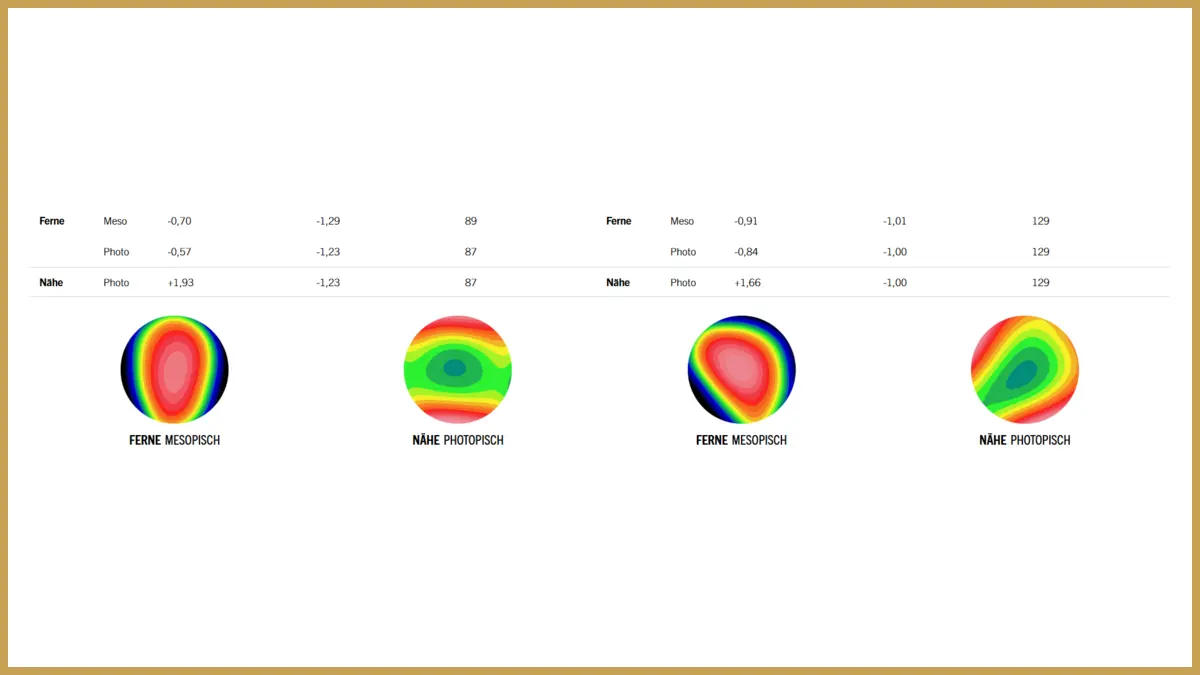
This records not only common values such as sphere and cylinder, but also additional optical aberrations of the eye
Important for you: Every person has individual visual values for distance and near vision. Modern lenses can take these differences into account. This is where the difference from a conventional eye test begins
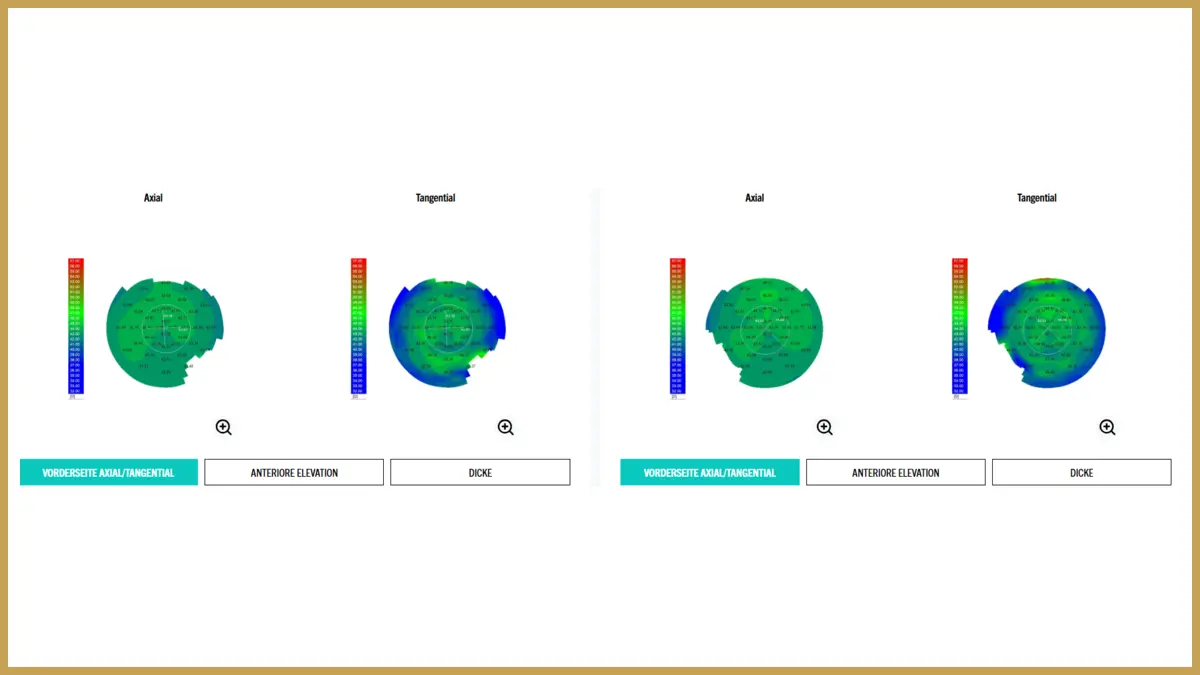
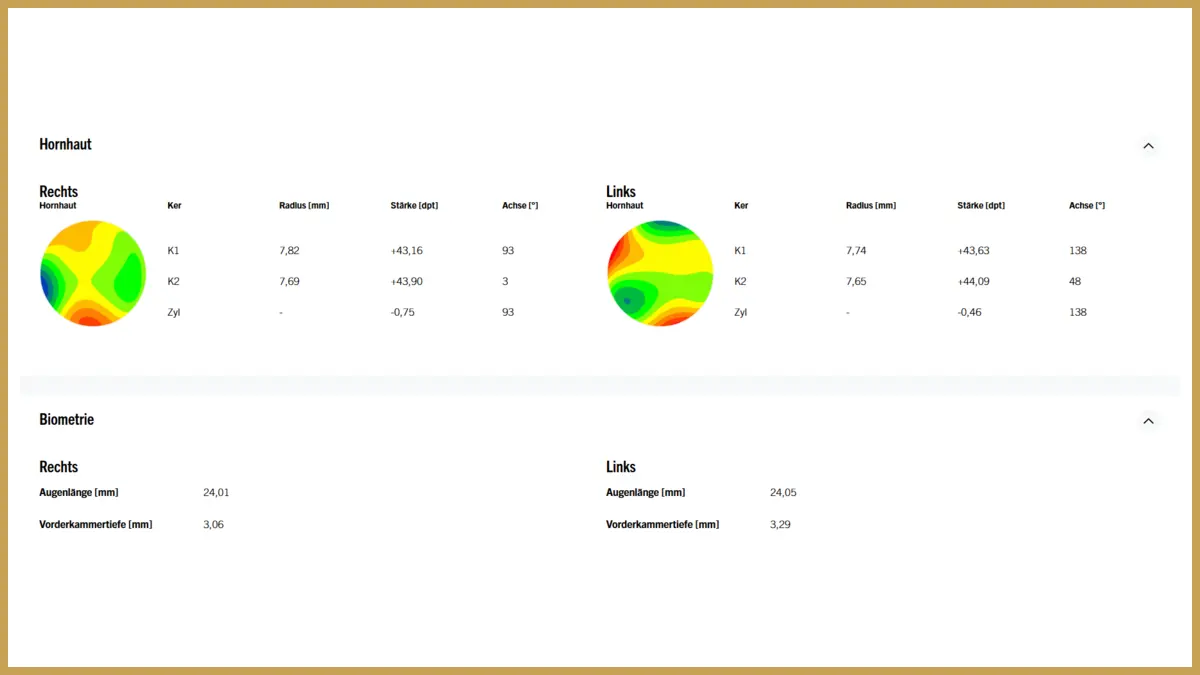
The shape of the cornea is displayed, allowing irregularities to be identified and assessed more precisely
Important for you: This supports more precise lens calculations and is also relevant for contact lenses
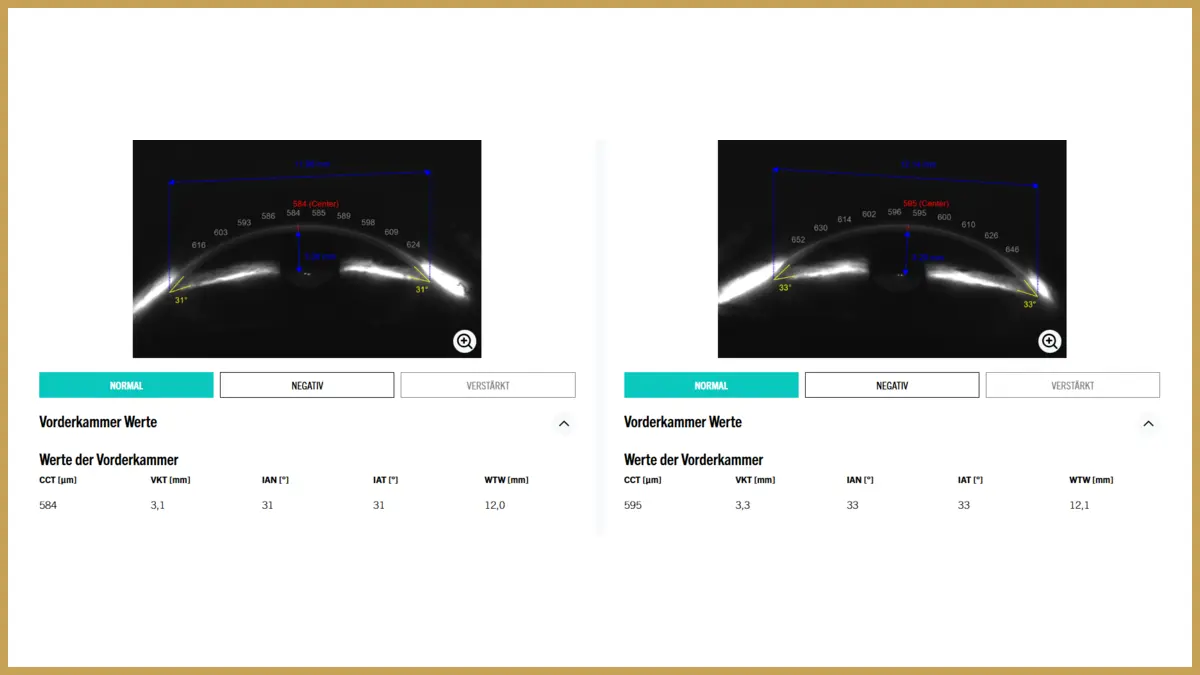
Pachymetry measures the thickness of the cornea and checks its structure for irregularities. It also provides a clear representation of the different areas of the cornea
Important for you: Corneal irregularities can affect visual quality and play an important role when selecting and fitting your new lenses
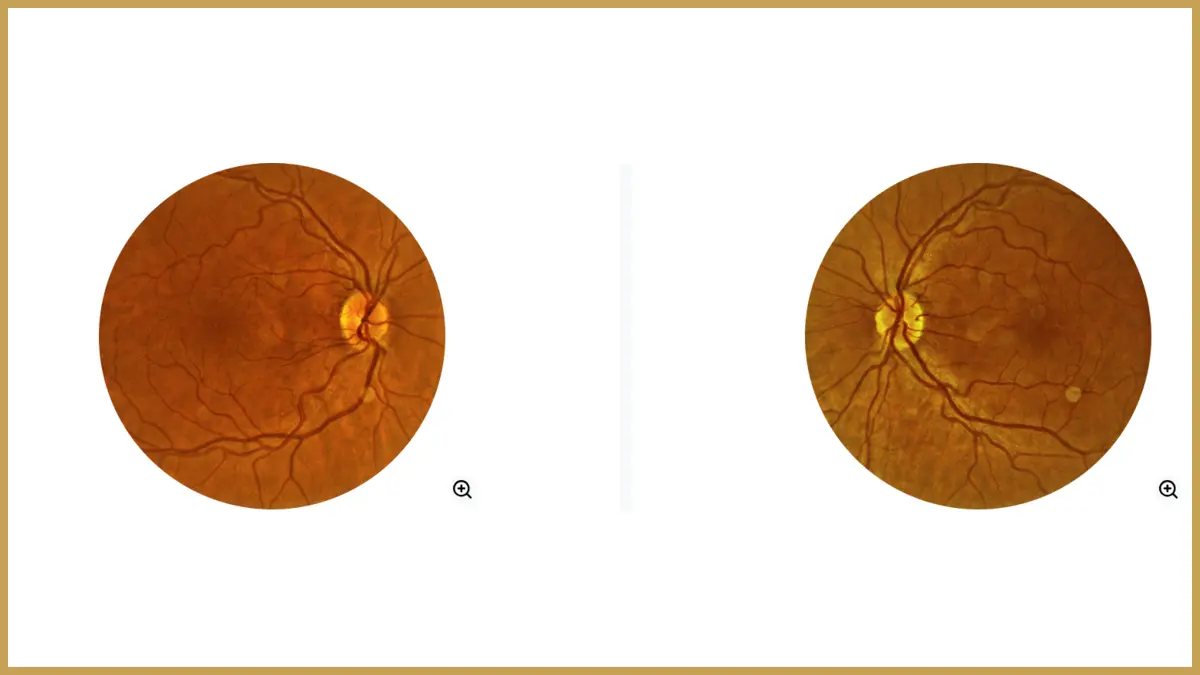
The fundus image shows the back of the eye. If anything unusual is detected, the image can be passed on for ophthalmological assessment with your consent
Important for you: If no timely ophthalmology appointment is available, a preventive screening at Hercht Vision can provide initial indications. It does not replace an ophthalmological examination
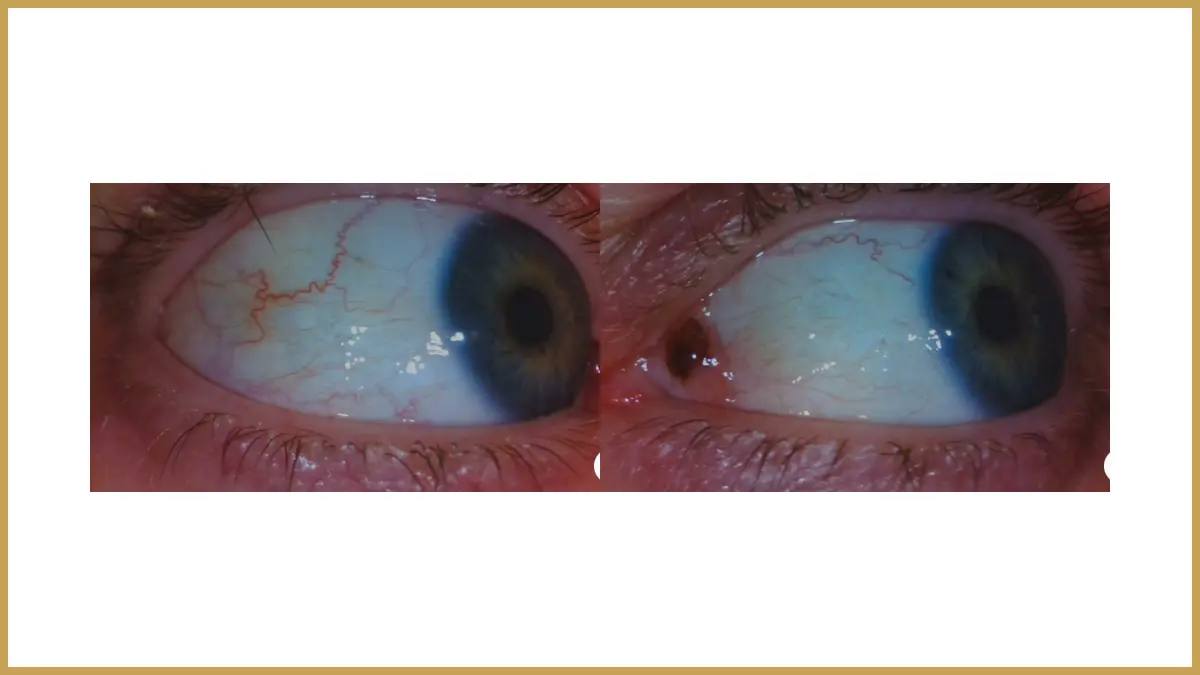
A photograph of your eye can say more than a thousand words. It can provide indications of dry eyes, changes to the conjunctiva and visible UV-related abnormalities
Important for you: These factors can affect visual comfort with your glasses or the tolerance of contact lenses
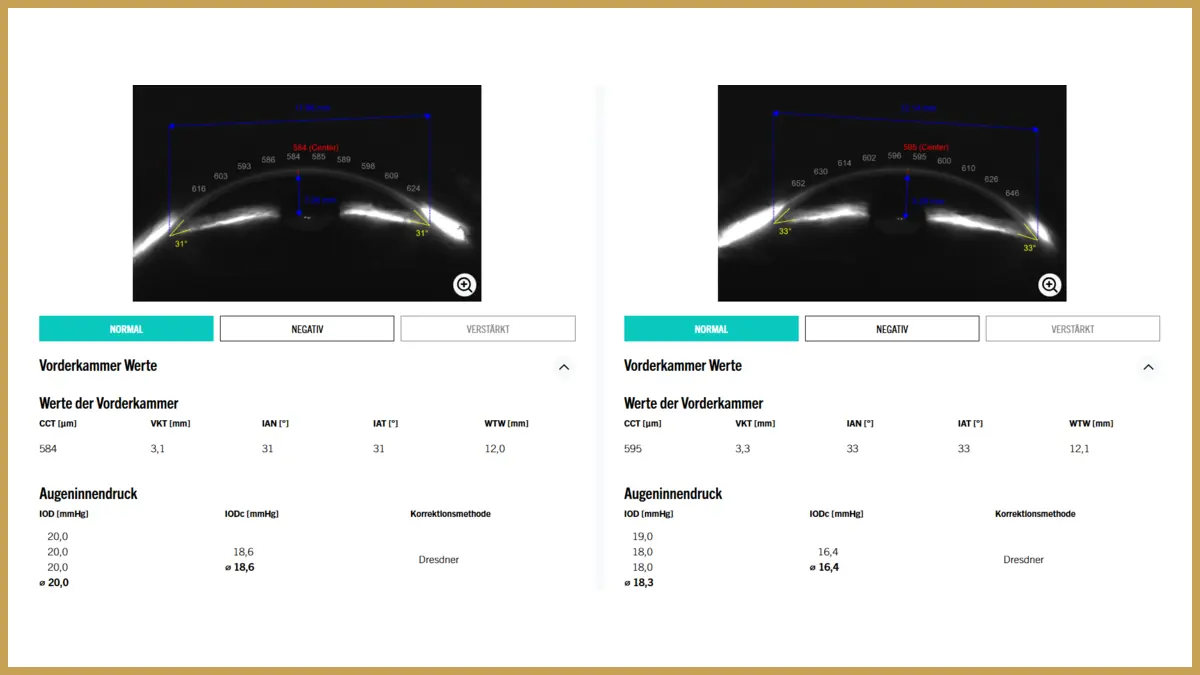
Tonometry provides an indicative measurement of intraocular pressure. The result complements our vision analysis and can be particularly relevant for short-sighted eyes
Important for you: Elevated intraocular pressure can damage the optic nerve and impair vision. Glaucoma may run in families. Unusual readings should therefore be assessed by an ophthalmologist
To monitor progressive short-sightedness, we measure the length of the eye at regular intervals. Especially in children, above-average eye growth can cause myopia to progress more quickly
Important for you: If your child is short-sighted, it is worth taking action early. Hercht Vision provides detailed advice on ways to slow the progression of myopia
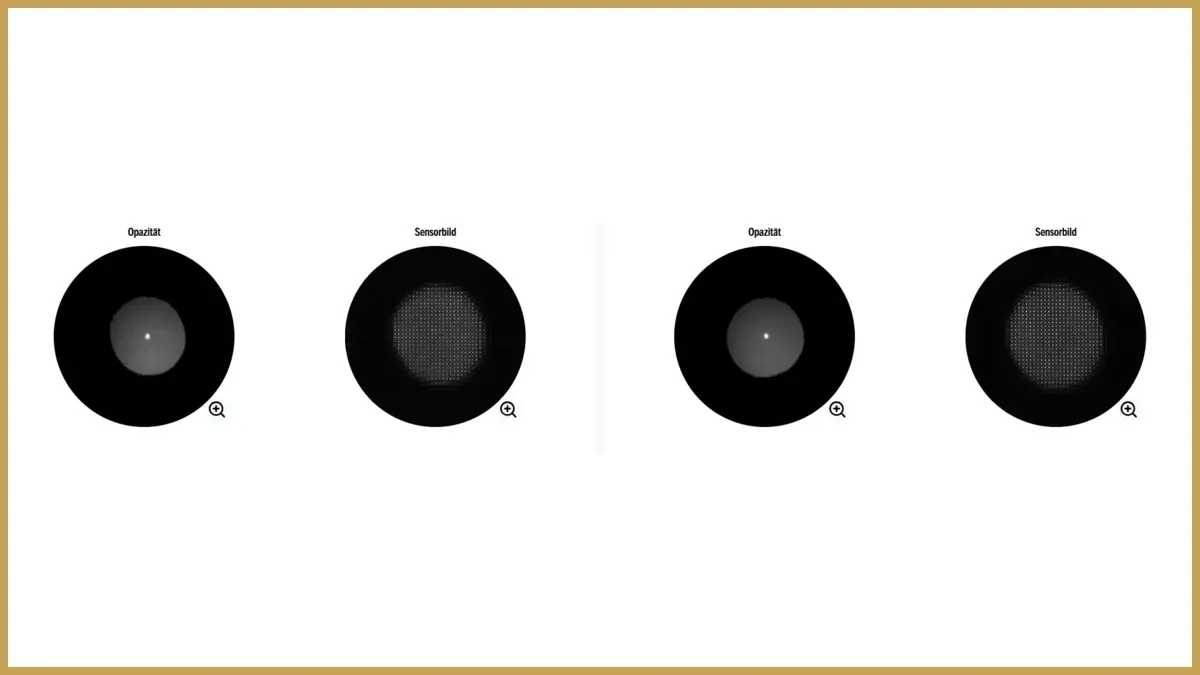
The natural lens of the eye plays an important role in vision. Reduced light transmission can impair visual quality
Important for you: We assess how well light passes through your eye and whether abnormalities of the crystalline lens could affect your visual impression
The goal is not just a measurement report, but a solution that feels more precise, more natural and more comfortable in everyday life.
The measurement provides far more information than a classic eye test alone.
A precise data basis is particularly valuable for high-quality and individually calculated lenses.
We translate the technology into plain language and explain why the measurement matters for your vision.
Here you can watch an English-language video about the DNEye® Scanner directly on the page.
Once the right frame has been selected, the next step can be precise centration, depending on the lens solution. At this stage, the eye itself is no longer measured biometrically. Instead, we determine exactly how the lenses need to be positioned in front of your eyes. This is especially important for personalised premium lenses.
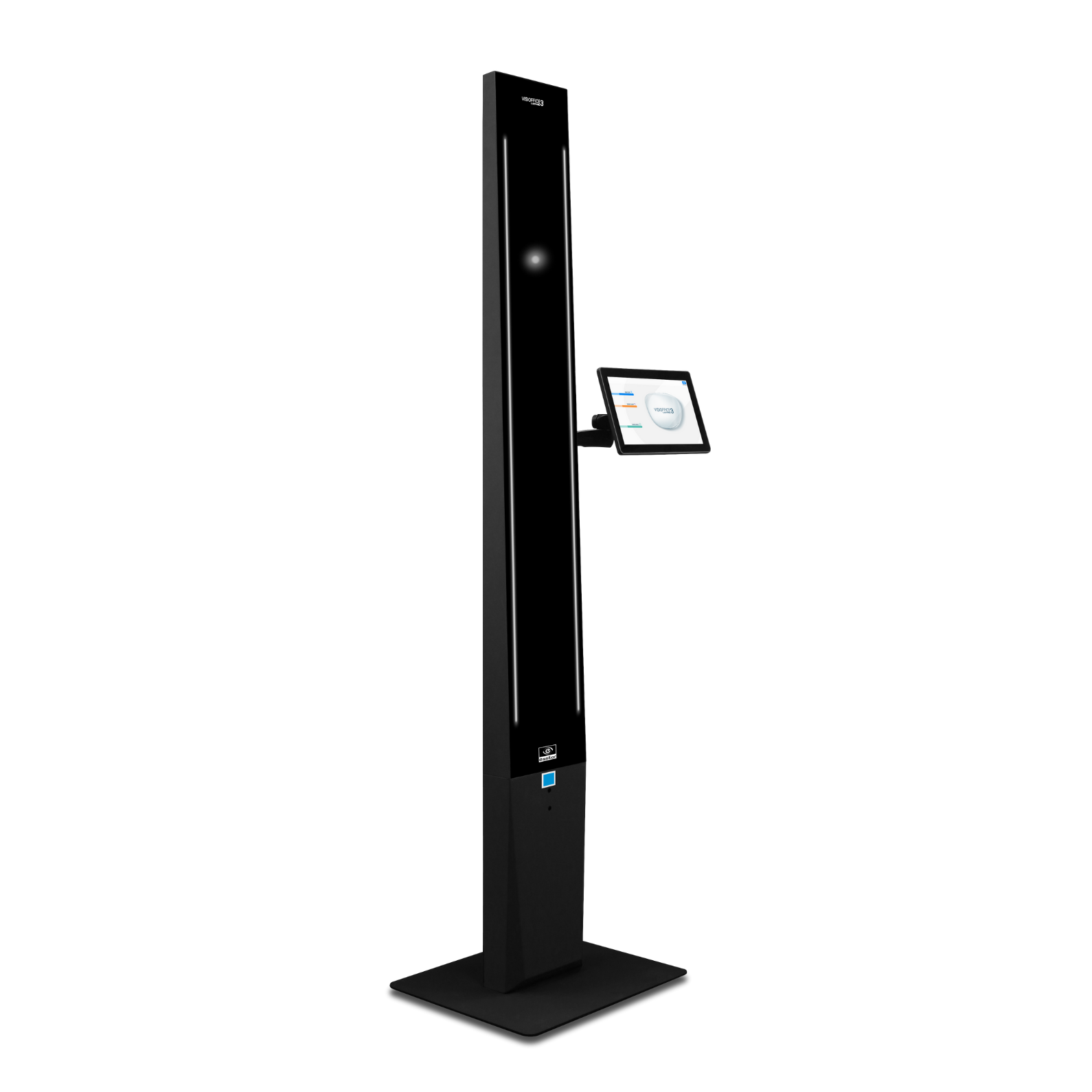
Eyecode® determines the exact 3D position of the Eye Rotation Center and adds another individual parameter for personalised lens calculations.
The dominant eye can also be taken into account, helping to create a more natural and harmonious visual experience.
The system records the distance at which you usually read or look into the near zone.
Using the H3D protocol, the natural and repeatable body posture in distance vision can also be analysed where applicable.
The Near Vision Behaviour protocol captures behaviour in near vision and can be used for an even more individual near-vision setup with compatible lens solutions.
Additional parameters such as PD, fitting height, vertex distance, pantoscopic tilt and frame wrap are also taken into account.
Important: The systems remain clearly separated here: DNEye® Scanner for biometric eye measurement, Visioffice® 3 for professional centration after the frame has been selected.
Measurement and centration serve different purposes, but together they help ensure that your eyewear solution can be adapted to you as precisely as possible.
The DNEye® measurement provides the basis for biometrically individualised Rodenstock lenses.
Centration with Visioffice® 3 ensures that personalised lenses match the frame, head posture and viewing behaviour precisely.
More precision, more natural vision and a more relaxed visual experience in everyday life.
We talk about how you use your glasses, what is bothering you and what you expect from your new solution.
We check your prescription and, if needed, carry out advanced measurements with the DNEye® Scanner.
Together, we choose a frame that suits your face, your style and your everyday needs.
After choosing the frame, centration with Visioffice® 3 and suitable additional parameters can follow, depending on the lens solution.
Based on all data, we recommend the lens solution that makes sense for your eyes and your daily life.
Please note: Optical vision analysis and eye examination do not replace a medical eye examination. If there are medical concerns or unusual findings, an ophthalmological assessment is always recommended.
Whether it is biometric eye measurement with the DNEye® Scanner or professional centration with Visioffice® 3, we explain every step clearly and adapt your solution as individually as possible.
Please note: By clicking “WhatsApp” you use a service provided by WhatsApp/Meta. Their privacy policy applies.
Call us, send us a WhatsApp message or book your appointment directly online.